
Are you a man who is trying — genuinely trying — and still watching your relationship fall apart in slow motion? Are you a woman who loves a good man but cannot seem to reach him, no matter how many ways you try to tell him what you need? Are you a child growing up in a home where the tension is quiet but constant — where nobody is hitting anyone, but nobody is really okay either?
If any of those questions landed somewhere personal, this story is for you.
I Started With the Children
When I began my career as a psychologist, I went straight into children’s mental health.
There were practical reasons for that. Children’s mental health is one of the most funded areas in the field. Jobs are available. The need is undeniable. And I genuinely wanted to help children — I believed then, as I believe now, that getting to a person early is the most powerful intervention possible.
So I showed up every day for the children. I listened to them. I worked with them. I watched them slowly begin to open up, to trust, to make progress.
And then they would go home.
And the next week, they would come back — and everything we had built together had quietly unraveled. Again.
It did not take long for me to understand why.
The Real Problem Was Never the Child
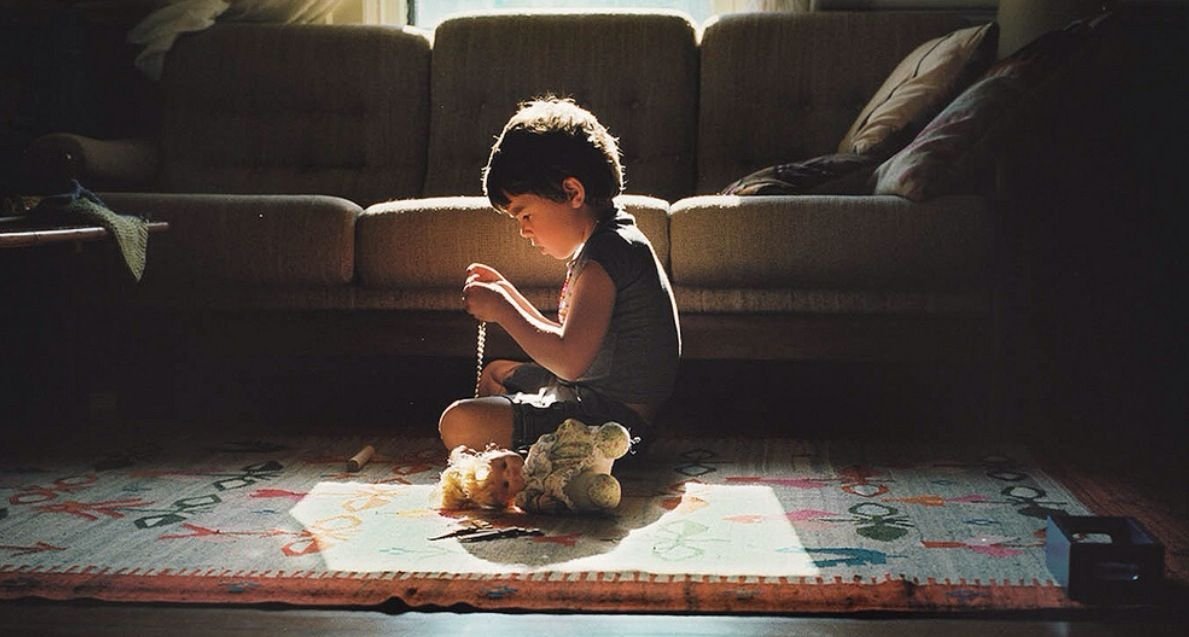
A child does not develop anxiety in a vacuum. A child does not become withdrawn, angry, clingy, or shut down for no reason. A child’s nervous system is shaped — profoundly and permanently — by the emotional environment of the home they grow up in.
I could spend fifty minutes a week helping a child learn to regulate their emotions. But if they were spending the other ten thousand minutes a week inside a home full of unresolved tension, unspoken pain, or emotional absence — I was not healing them. I was managing them.
The real work was not with the child. It was with the parents.
So I shifted. I stopped seeing children and began seeing adults — eighteen and above. I began working with the people who were creating the emotional environment that children were absorbing every single day.
Then I Saw the Women
When I began working primarily with adults, a pattern became impossible to ignore.
The majority of the people sitting across from me were women. Women in pain. Women carrying more than their share. Women who were exhausted, lonely, and quietly desperate for something they could not always name.
And almost universally — the pain traced back to one place.
Their relationship with a man. Or the absence of one.
Some were in relationships that looked fine from the outside — stable, functional, even enviable — but felt hollow on the inside. They described feeling invisible. Unheard. Like they were managing a household and a partnership alone, even with a partner present. Like the man they loved was somewhere far away, even when he was sitting right next to them.
Others had no partner at all — and the absence itself had become its own wound. They were raising children alone. Working without a net. Trying to be everything because there was no one else to be anything.
In both cases, the woman’s mental health was suffering. And where the mother’s mental health suffers, the child’s mental health follows.
The pattern was becoming undeniable.
A mother in pain raises children in pain.
A woman without emotional safety cannot provide emotional safety.
A home without a grounded, present man is a home where children learn, from the very beginning, that men are either absent or unavailable.
And those children grow up and repeat the cycle.

So I Turned to Face the Men
I made a decision that surprised some people.
I decided I needed to work with men.
Not because women did not need support — they absolutely do, and I continue to support them. But because I had followed the thread all the way back to its source. And the source, in case after case, was a man who had never been taught how to be emotionally present. A man who had never learned that love is not just provision. A man who was trying — often genuinely, often desperately — with an incomplete blueprint.
A man whose own childhood wounds had never been addressed.
Because here is the truth that twenty-three years of clinical work has made undeniable to me:
You cannot give what you never received.
A man who grew up without emotional mirroring cannot naturally provide it. A man who was taught that worth equals achievement will spend his whole life performing for love he does not know how to simply receive. A man who never saw his father lead a home with warmth and presence has no internal model for what that even looks like.
He is not broken. He is not the villain. He is a boy who grew up and carried his wounds quietly into the most important relationships of his life — and then wondered why those relationships kept failing.

This Is How Childhood Trauma Ends
Here is what I know.
When a man heals — when he does the work of understanding his own wounds, developing his emotional groundedness, and learning how to lead with presence rather than just provision — everything around him shifts.
His partner feels safe for the first time in years. She exhales. She opens. She gives back the appreciation, the warmth, the companionship he has been quietly starving for.
His children grow up watching a man who is present. Who is emotionally available. Who leads with strength and tenderness at the same time. They absorb that model into their nervous systems — and they carry it forward into their own relationships.
The cycle does not just slow down. It breaks.
A healed man raises emotionally whole children. Emotionally whole children become adults who know how to love. Adults who know how to love build homes where the next generation thrives.
This is not idealism. This is the clinical reality I have watched unfold in my practice for over two decades.
The most powerful intervention I can make for a child is to reach their father.
Why I Built the Relational Language Quiz
I built the Relational Language Quiz because most men do not know where to start.
They know something is wrong. They can feel the distance. They can sense the disconnection. But they do not have the language for it. They do not have a map. And without a map, the most well-intentioned man will keep walking in circles — working harder, providing more, and wondering why nothing changes.
The quiz gives him the map.
It shows him — clearly, specifically, without judgment — how he is wired to give and receive love. What his partner most needs from him. What he most needs from her. Where his patterns are coming from. And what becomes possible when both people finally understand how the other is built.
It is not a personality test. It is not a love languages quiz. It is a clinical framework grounded in attachment theory, nervous system research, and two decades of sitting across from people who were trying to love each other and kept missing each other.
It takes fifteen minutes. It costs nothing to try. And for the men and women who have taken it — it has started conversations that years of trying could not start.
A Note to the Men Reading This
I know you may not be used to reading blogs like this one. I know the world does not often create spaces where men are invited to look honestly at their emotional lives without being shamed or labeled or told they are the problem.
This is not that space.
You are not the problem. You are a man who was handed an incomplete blueprint — and who has been doing his best with what he was given.
But your best can become better. Not because you are broken. Because you are capable of more than you have been shown.
The quiz is the first step. It will not fix everything. But it will show you something about yourself that most men never get the chance to see clearly.
And clarity, in my experience, is always the beginning of change.
A Note to the Women Reading This
If you forwarded this to your partner — thank you. That act alone took courage.
If you are reading this alone, hoping he might eventually find his way here — I see you. Keep going.
And if you are raising children in a home without a present, grounded man — know that your healing matters just as much. Because a woman who understands her own relational wiring, who knows what she needs and can name it clearly, who stops accepting less than she deserves — that woman changes the story too.
The quiz is for you as well.
This Is Why I Do What I Do
I did not set out to become a specialist in masculine emotional development. I set out to help children.
But the thread led me here. To the men. To the relationships. To the invisible wounds that travel quietly from one generation to the next — shaping the homes, the children, and the futures of people who never asked to carry any of it.
Childhood trauma ends when adults heal.
Adults heal when they understand themselves.
Understanding begins with honesty.
And honesty begins with a single, courageous question:
What am I actually carrying — and what is it costing the people I love?
The quiz will not answer that question for you. But it will give you a language to begin.